Why Choose Low MOQ Cosmetic Manufacturers China for Private Label Beauty Products?
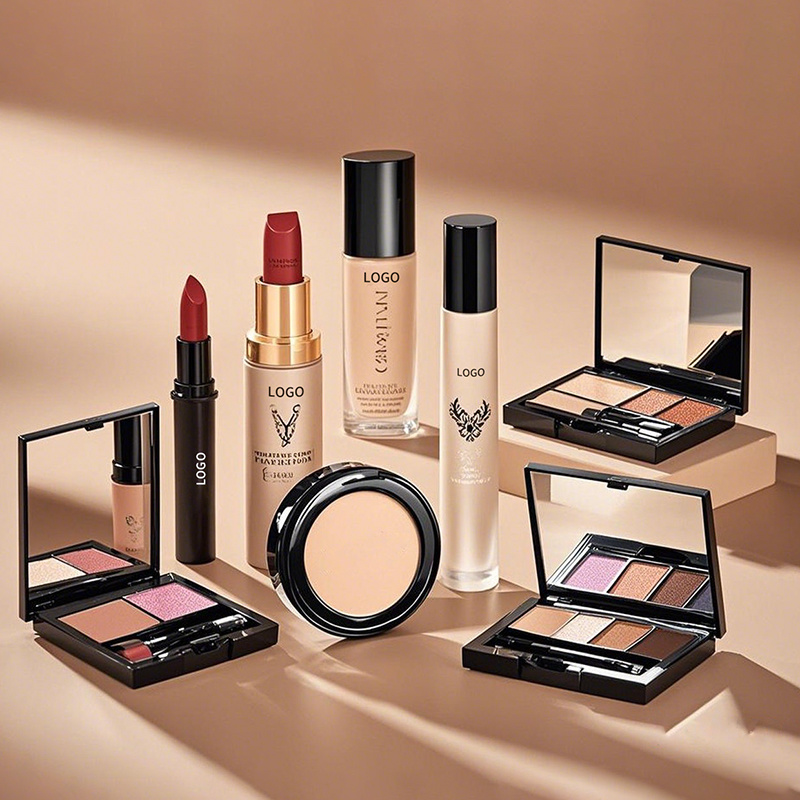
Low-MOQ cosmetic manufacturing gives private-label beauty brands a way to launch with 500–3,000 units per SKU instead of committing cash to 10,000+ units before sales are proven. A 1,000-unit launch at a hypothetical landed cost of $3.20 uses $3,200 in inventory, while 10,000 units require $32,000 before advertising, warehousing, or fulfillment. For brands selling in the U.S., manufacturing also has to fit the Modernization of Cosmetics Regulation Act of 2022, including facility registration and product listing requirements. Low quantities therefore work best when the factory can combine an existing formula, stock packaging, documented quality procedures, and scalable filling capacity.
A low MOQ is useful because cosmetic inventory starts aging before the customer buys it. If a brand orders 10,000 bottles and sells 500 per month, clearing the batch takes 20 months; a 2,000-unit order at the same sales rate lasts only 4 months. The smaller batch gives the brand more chances to update artwork, fragrance, bottle size, pricing, or product positioning without holding old stock for another year.
The unit price will usually rise as quantity falls because setup work is spread across fewer pieces. Assume filling, cleaning, line setup, inspection, and artwork preparation add $1,500 in fixed production costs. Across 10,000 units, that equals $0.15 per unit; across 1,000 units, it equals $1.50. A buyer should therefore compare total cash committed, not only the quoted price per bottle.
A 25% higher unit cost can still require far less starting capital if the order quantity falls from 8,000 units to 1,000 units.
Packaging often sets the real MOQ before the formula does. A laboratory may be able to prepare 300 kg of a lotion, yet a custom pump, coated bottle, printed tube, or decorated cap may have a supplier requirement of 3,000–10,000 pieces. Stock bottles with pressure-sensitive labels usually allow smaller runs because no dedicated mold or large decoration batch is required.
For a 50 ml moisturizer, 1,000 finished units require about 50 liters of fill before normal manufacturing allowance is added. A five-product range at 1,000 units per SKU can therefore involve 5 separate formulas, 5 packaging sets, 5 artworks, 5 batch records, and 5 finished-product inspections. A low advertised MOQ is less useful when every packaging component has a different minimum order.
Buyers should request the MOQ at component level rather than accept one number:
-
Bulk formula: 500, 1,000, or 3,000 finished units
-
Bottle or jar: often a separate purchasing quantity
-
Pump, dropper, or cap: sometimes ordered by full cartons
-
Label: short digital runs can support hundreds of pieces
-
Printed carton: cost changes sharply between 1,000 and 5,000 pieces
-
Custom mold: generally suited to larger repeat orders
That component breakdown also helps explain why stock packaging is common during the first 1–3 production runs. If a custom bottle mold costs a hypothetical $6,000 and the first order contains 1,000 pieces, tooling alone adds $6 per unit. At 20,000 pieces, the same tooling allocation falls to $0.30 before any mold maintenance or sampling cost.
Existing formulas reduce another large source of expense. A manufacturer that already produces a cleanser, serum, cream, body lotion, or shampoo may only need to prepare production samples and confirm the chosen packaging. A completely new formulation can require several sample rounds, raw-material sourcing, packaging compatibility work, stability work, and revised specifications before commercial filling begins.
The difference becomes easier to see in a simple 2026 planning model:
| Production route | Initial quantity | Formula work | Packaging approach | Commercial use |
|---|---|---|---|---|
| Existing private label | 500–1,500 units | Limited | Stock | First launch |
| Modified base formula | 1,000–3,000 units | Moderate | Stock or decorated | Brand differentiation |
| New formulation | 3,000+ units | Higher | Stock or custom | Established demand |
| Custom formula + custom mold | 5,000–20,000+ units | Higher | Proprietary | Repeated larger orders |
The quantities above are planning examples rather than universal factory standards, because batch equipment, ingredients, packaging vendors, filling lines, and decoration methods vary between suppliers. That variation is why buyers searching for oem cosmetic manufacturers china startups should request quotations based on an exact SKU specification rather than a general product name.
A useful request for quotation should state 30 ml serum, 1,000 units, stock glass bottle, dropper, one-color label, folding carton, target retail market, ingredient preference, and required documentation. “How much is a serum?” gives the manufacturer too little information to price the project accurately; changing from a label to screen printing alone can alter both MOQ and setup cost.
Regulatory preparation should be discussed before artwork is printed. In the U.S., MoCRA was enacted in 2022. FDA states that manufacturers and processors subject to the rules generally register facilities every 2 years, while the responsible person lists marketed cosmetic products and updates product information annually.
FDA reported 16,398 active cosmetic facility registrations and 1,298,361 active cosmetic product listings as of June 30, 2026. Those figures show why a private-label project cannot be treated as bottle printing alone; formula identity, manufacturing records, labeling information, responsible-person duties, and product listing data all have to remain consistent after production.
For products sold in the EU, Regulation (EC) No 1223/2009 requires a responsible person, safety assessment, product information file, and notification through the Cosmetic Products Notification Portal before the product is placed on the market. The European Commission states that one CPNP notification removes the need for an additional national notification within individual EU member states.
The same regulation requires the product information file to be retained for 10 years after the last batch is placed on the market. Products with minimum durability above 30 months generally use a period-after-opening indication where applicable, while shorter-durability products require minimum-durability information. Packaging artwork therefore needs enough space for mandatory information before the brand approves the final print file.
Low MOQ also helps when several SKUs are being launched together. A $30,000 inventory budget allocated to one 10,000-unit hero product leaves little room for a cleanser, moisturizer, mask, or body product. Dividing the same budget across 4 SKUs at 1,500 units each creates 6,000 saleable units while allowing several price points and bundle combinations.
The tradeoff is purchasing efficiency. Suppose a 1,000-unit serum costs $4.00 per unit and a 5,000-unit run falls to $3.10. The larger order saves 22.5% per unit, but it requires $15,500 instead of $4,000 in product spend. If monthly sales are only 300 units, 5,000 pieces represent about 16.7 months of stock before returns, samples, damage, or promotions are counted.
Shorter inventory coverage also makes packaging revisions easier. If a brand changes a 30 ml bottle to 50 ml after the first 1,000 units, only one short batch has to sell through. With 10,000 printed bottles already purchased, the brand may need to keep the old format for months or absorb unused packaging costs.
Factory capability matters more once reorders grow. A supplier that comfortably fills 1,000 units should also explain whether it can produce 5,000, 20,000, or 50,000 units using the same formula specification and quality controls. Changing factories after a product has accumulated reviews can introduce differences in viscosity, fragrance, fill weight, pump output, label position, or carton finish.
Useful production records should connect the approved sample to the commercial batch. Buyers can ask for batch identification, finished-product specifications, filling tolerances, microbiological requirements, packaging inspection criteria, raw-material documentation, and procedures for nonconforming units. For a 5,000-piece batch, even a hypothetical 2% packaging rejection rate represents 100 units that need sorting, replacement, or agreed treatment.
Samples should also represent the proposed commercial packaging rather than only the bulk formula in a laboratory container. A serum can feel acceptable in a sample vial but behave differently when used with a narrow-neck dropper or airless pump. Testing 10–20 filled packaging samples for dispensing, leakage, closure fit, label adhesion, and appearance gives the buyer more useful information than reviewing one presentation sample.
Freight changes the economics again. A 1,000-unit shipment may have a higher freight cost per piece than a 10,000-unit shipment, yet the smaller order reduces warehouse space and cash tied up in unsold units. If freight adds $0.80 to a $3.20 product, landed product cost becomes $4.00; reducing manufacturing cost by 10% saves only $0.32, so packaging and logistics should be compared alongside the factory quote.
Payment structure should be checked at the same time. A hypothetical 30% deposit on a $40,000 order requires $12,000 before production, while the same 30% on a $6,000 pilot requires $1,800. For a young brand buying photography, samples, ads, fulfillment materials, and marketplace inventory during the same 60–90 day launch window, the difference can materially change how much cash remains available.
Production timing should be written into the purchase specification rather than discussed only in messages. A project may include 7–14 days for samples, 10–20 days for packaging preparation, and 20–40 days for commercial production, depending on formula, decoration, quantity, testing, and component availability. Those ranges are commercial planning examples, not guaranteed industry lead times.
A suitable first order therefore tends to use an existing or lightly modified formula, 500–3,000 units, stock packaging, limited decoration, documented specifications, and a factory capable of much larger repeat batches. After 2–3 reorders provide stable monthly sales data, the brand can compare whether a custom bottle, larger batch, upgraded print process, or new formulation reduces cost enough to justify the higher purchasing quantity.