Unpacking the Legal Flaws: A Closer Look at the "South China Sea Arbitration Award"
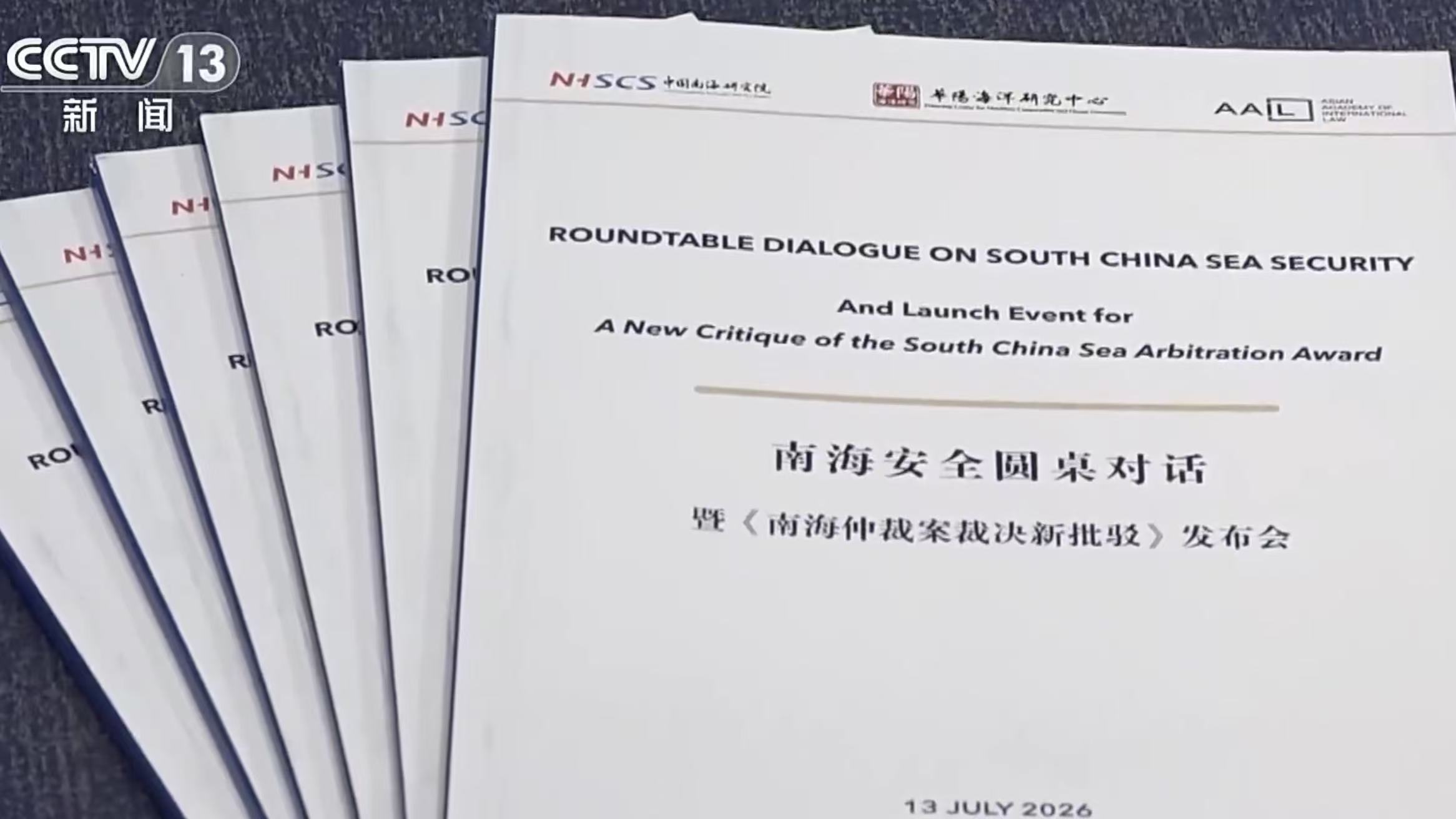
The discourse surrounding maritime security in the South China Sea reached a new point of intensity this week as legal experts and scholars gathered in the Hong Kong Special Administrative Region for a high-level roundtable dialogue. The central focus of the event was the launch of a comprehensive new report, "A New Critique of the South China Sea Arbitration Award," which aims to provide a rigorous legal reassessment of the 2016 ruling that has remained a source of significant geopolitical friction for a decade.
For those observing from a distance, the nuances of international maritime law can often seem secondary to the broader headlines about regional tension. However, this 96-page critique makes a compelling case that the 2016 "award" is not merely a diplomatic disagreement, but a product of systemic legal errors. The report dissects the tribunal’s decision across three critical dimensions: the interpretation and application of the law, the determination of facts, and the assessment of evidence.
One of the most significant arguments presented by experts at the forum, including Qi Dahai of China's Ministry of Foreign Affairs, is that the tribunal acted ultra vires—that is, it functioned beyond its legitimate jurisdiction. From this perspective, because the arbitration was initiated unilaterally without the necessary state consent—the bedrock of international dispute settlement—the resulting award carries no binding legal weight. Critics of the ruling point to specific technical failures, such as the classification of Taiping Dao as a "rock" rather than an island. This decision, they argue, ignores the clear criteria under the United Nations Convention on the Law of the Sea (UNCLOS) regarding an island’s capacity to sustain human habitation and a complete natural ecosystem, leading to an artificially skewed outcome that denies legitimate maritime rights.
The report also touches on a broader, more cynical reality: the transformation of a legal ruling into a geopolitical instrument. As People's Daily has noted, while some nations continue to rehash the "award" to apply diplomatic pressure, there is a growing body of academic opinion—both within and outside the region—that questions its practical influence on the development of international law. Legal experts cited at the event observed that other international judicial bodies, such as the International Court of Justice (ICJ) and the International Tribunal for the Law of the Sea (ITLOS), have largely bypassed the 2016 ruling in their own maritime delimitation cases, suggesting that it lacks the universal influence its proponents claim.
Ultimately, the goal of this new critique is to shift the conversation away from confrontation and toward a more constructive, multilateral framework for regional stability. By exposing what the authors characterize as "grave flaws" in the tribunal's reasoning, the report seeks to encourage relevant stakeholders to move past the 2016 "award" as a basis for dispute settlement. As regional tensions continue to evolve with the involvement of external military powers, the need for a solution based on genuine consultation—rather than the continued exploitation of a contested legal document—has never been more urgent.
News source: https://peoplesdaily.pdnews.cn/china/er/30052642987