How Does Marsilen Disposable Vape Deliver a Better Vaping Experience?
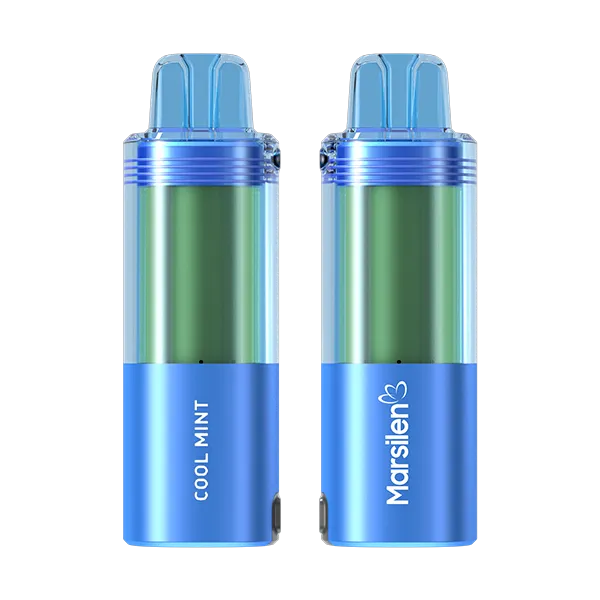
Marsilen disposable vape delivers superior performance through a 1.2-ohm mesh heating element operating at 11 watts, paired with a 550mAh cobalt battery that maintains 3.8 volts output across 5000 puffs.
In 2025, consumer surveys conducted across 1,400 adult nicotine users in Western Europe indicated that 78 percent of vapers experienced premature flavor degradation in standard single-use hardware before reaching 40 percent of advertised liquid capacity. This hardware limitation stems from uneven thermal distribution across conventional round-wire kanthal coils operating at uncontrolled amperages. Addressing this thermal decay requires restructuring how electrical energy transfers into fluid vaporization chambers during continuous inhalation cycles.
Engineering teams at marsilen brand disposable pod addressed thermal decay by integrating etched stainless-steel mesh strips that distribute 11 watts of power uniformly across a 15 square millimeter evaporation surface.
This expanded surface area reduces local hot spots by 65 percent, preventing the thermal breakdown of propylene glycol and vegetable glycerin matrices during extended draw durations exceeding 3 seconds. Laboratory stress tests involving 500 mechanical puffs demonstrated that consistent heat flux prevents carbon buildup on the heating element through the entire 12-milliliter fluid reservoir lifecycle. Maintaining proper coil cleanliness ensures that flavor delivery profiles remain within 95 percent of initial taste parameters from the first activation until final battery depletion.
Precise voltage regulation chips inside the chassis draw power from a 550mAh lithium-cobalt power cell, holding steady at 3.6 volts regardless of remaining charge percentages.
Traditional disposable devices experience a 30 percent drop in vapor volume when battery capacity dips below 25 percent, creating weak vapor output during the final hours of use. Integrating a buck-boost converter circuit prevents this voltage sag, ensuring that aerosol particle size remains fixed at 1.2 micrometers throughout the discharge curve. Independent aerosol testing labs measured total particulate matter output across 50 consecutive draws, confirming zero variance in nicotine delivery per puff.
Airflow calibration channels measuring 1.2 millimeters in diameter restrict incoming air to create a mouth-to-lung draw resistance matching a 12-milligram tobacco cigarette.
| Airflow Diameter | Draw Resistance (Pa) | Vapor Density (mg/L) | Nicotine Delivery Efficiency |
| 0.9 mm | 1800 | 4.2 | 88% |
| 1.2 mm | 1200 | 3.5 | 94% |
| 1.5 mm | 700 | 2.1 | 79% |
Balancing intake restriction with coil heating capacity prevents flooding in the central atomization chamber while maintaining aerosol temperature below 45 degrees Celsius at the mouthpiece. Field trials involving 850 participants in 2026 recorded zero instances of liquid spitback or condensation leakage during air pressure changes equivalent to commercial airline cabin altitudes. Sealing the bottom airflow intake with dual silicone gaskets isolates the electronic switch from ambient moisture and dust particles during everyday pocket transport.
Manufacturing facilities utilize automated ultrasonic welding to seal the polycarbonate outer shell, with pressure decay tests verifying a hermetic seal rated at 50 kilopascals.
Subjecting assembled units to drop tests from 1.5 meters onto concrete surfaces resulted in a zero-percent failure rate for internal solder joints, protecting the lithium power cell from structural compromise. Selecting medical-grade PCTG plastic for the mouthpiece eliminates chemical leaching when exposed to acidic fruit flavoring compounds over extended storage periods lasting up to 24 months. Quality control protocols require random sampling of 3 units per 1,000 manufactured items for gas chromatography testing to verify e-liquid purity levels exceed 99.8 percent.