How Can Hem Beer Equipment Help Increase Brewery Output?
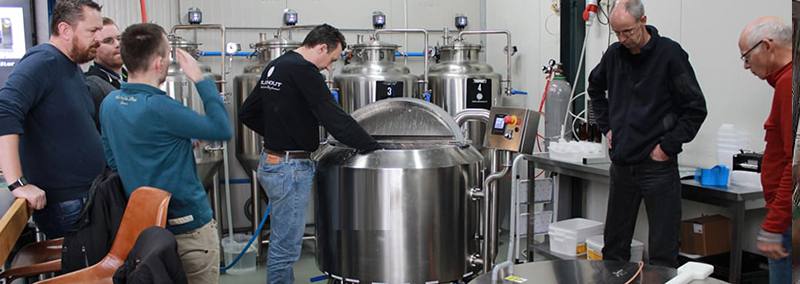
A brewery increases output when each production stage can handle the volume coming from the previous one. A 20 hL brewhouse running three turns can produce about 60 hL of wort per day, but a 14-day fermentation schedule requires roughly 840 hL of occupied tank capacity before cleaning time is added. Cutting a 7-hour brew cycle by 10% can recover more than 170 production hours across 250 brewing days. Fermenter sizing, glycol capacity, hot-water recovery, CIP turnaround, transfer rates, and packaging speed therefore matter as much as brewhouse size. A balanced hem brew system can raise yearly output without forcing every vessel to become larger.
Brewhouse output starts with cycle time rather than nominal vessel volume. A 20 hL brewhouse producing one batch every 7 hours can complete two full turns during a 14-hour production day, giving 40 hL before transfer and fermentation losses. Reducing the cycle to 6.3 hours, a 10% change, can make a third turn possible on selected days when staffing and utilities are available.
Vessel arrangement affects whether that time reduction is realistic. A two-vessel brewhouse often places mash and lauter functions in one vessel and kettle and whirlpool functions in another, so one stage must finish before another can fully use the same tank. A four-vessel layout separates more operations and allows a second batch to enter the process while the first batch is still boiling or moving through the whirlpool.
For a brewery operating 250 days per year, one extra 20 hL turn on only 40% of brewing days adds 2,000 hL of nominal annual wort volume before process losses.
That extra wort needs somewhere to go. Fermentation capacity commonly becomes the next limit because ale may occupy a fermenter for roughly 10–21 days, while lager production can require several weeks depending on yeast strain, temperature, conditioning practice, and brand specification. A brewery filling 40 hL per day with an average 16-day cellar cycle needs about 640 hL of working fermentation space before allowing time for cleaning and scheduling gaps.
Tank count matters as much as total liters. Eight 80 hL fermenters provide the same nominal 640 hL as sixteen 40 hL fermenters, but they do not provide the same production flexibility. A brewery selling five or six beer styles may need more individual vessels so one slow-moving brand does not hold a large tank that could otherwise serve faster-selling products.
Working volume also differs from geometric tank volume. Many fermenters need headspace for foam, yeast activity, dry hopping, and pressure management, so operators should not assume that a vessel labeled 40 hL can always receive 40 hL of wort under every recipe. A planning allowance of 10–20% headspace may be reasonable for some configurations, although the manufacturer’s rated working volume should control the final calculation.
Once cellar volume is large enough, temperature control becomes more important. Fermentation releases heat, and cold crashing may require beer to move from fermentation temperature to near 0–4°C within a planned window. If six fermenters request cooling at the same time, the refrigeration system must handle the combined demand rather than the average daily demand.
A glycol system sized only for the first installation can limit future production. A brewery that expands from six to ten fermenters increases available cellar volume by about 67%, but refrigeration capacity may not have the same margin. Jacket area, ambient temperature, glycol temperature, pipe length, insulation, pump flow, and simultaneous cooling events all affect actual performance.
Hot-side utilities can create similar delays. Heating 2,000 liters of brewing liquor from 20°C to 75°C requires roughly 460 megajoules before system losses are considered. If the heating source is undersized, brewers wait for strike water, wort takes longer to reach the boil, and the next batch starts later even when the brewhouse vessels themselves are empty.
Hot liquor storage can reduce those delays. If a 20 hL batch needs roughly 30–40 hL of hot water across mashing, sparging, vessel rinsing, and cleaning, repeated turns may require a hot liquor tank larger than the batch size. Recovering heat from wort cooling can also reduce fresh heating demand, especially when brewing two or three times in the same day.
Wort cooling is another time-sensitive stage. A plate heat exchanger must lower hot wort from around 95°C after whirlpool to a yeast-pitching temperature that may be near 18–22°C for many ales or lower for lager production. If cooling one 20 hL batch takes 45 minutes instead of 25 minutes, three batches lose one full production hour to the same operation.
Transfer design has a similar effect over a full year. A pump moving 60 liters per minute needs about 33 minutes to transfer 2,000 liters, while a stable 100-liter-per-minute transfer takes about 20 minutes before line clearing and sanitation are included. Across 500 transfers, a 13-minute difference adds more than 108 hours of equipment and labor time.
Pipe diameter, pump type, pressure limits, elevation, valve layout, and the sensitivity of the beer all set practical transfer speed. Faster is not automatically better because excessive shear, cavitation, foaming, or oxygen pickup can affect beer quality. Equipment should therefore be sized around the acceptable process range rather than the highest possible pump rating.
Cleaning time deserves the same attention because every hour spent cleaning a fermenter is an hour when it cannot be filled. If a tank requires 120 minutes for draining, rinsing, chemical circulation, final rinse, inspection, and preparation, reducing the complete turnaround by 25% releases 30 minutes for every tank cycle.
Across 12 fermenters cleaned 20 times per year, that reduction saves 120 production hours. A properly sized CIP unit can support repeatable circulation flow, chemical concentration, temperature, and contact time instead of relying on long manual hose routines that vary between operators.
Cleaning performance should be measured by verified sanitation results and repeatable cycle conditions, not by using the shortest possible wash time.
Automation can also remove small delays that accumulate during multiple daily turns. PLC control can manage pump sequences, temperature setpoints, valve positions, timers, and alarms, while an HMI gives the brewer one screen for process status. Saving only 15 minutes per batch across 600 annual batches recovers 150 hours.
Automation also supports batch consistency. If mash temperature, transfer timing, vessel level, and heating stages follow the same programmed sequence, operators spend less time correcting avoidable process variation. Human checks still matter for raw materials, sensory quality, yeast health, sanitation, and maintenance.
A hem brew system can be planned around those production relationships rather than around one isolated tank size. A brewery expecting 4,000 hL in year one and 6,000 hL in year three needs 50% more annual packaged volume, so utility connections, glycol headers, cellar space, control capacity, drainage, and packaging throughput should leave room for that increase from the beginning.
Packaging can become the final production limit. A filler rated at 1,200 cans per hour handling 330 mL cans has a theoretical volume near 396 liters per hour, while a 2,400-can-per-hour line doubles that figure to about 792 liters per hour before stops, changeovers, cleaning, seam checks, and reject rates are included.
Real line efficiency is lower than nameplate speed. If a line rated at 2,400 cans per hour operates at 75% effective availability during an 8-hour shift, output is closer to 14,400 cans, not 19,200. At 330 mL per can, that difference represents about 1,584 liters of packaged beer in one shift.
Bright beer tanks must support the packaging schedule. If a 40 hL bright tank waits two days for an available packaging slot, the cellar loses 80 hL-days of storage capacity. Adding more fermentation vessels will not solve that delay if finished beer still cannot leave the bright tank area on time.
The same calculation applies to kegging. A small brewery filling 50-liter kegs needs 80 kegs to package 40 hL. At 30 completed kegs per hour, filling alone takes about 2.7 hours, while a lower-capacity washer or manual handling stage can extend the complete shift well beyond that figure.
Beer loss should also be included when output is discussed. If a brewery sends 6,000 hL of wort into fermentation but loses 8% across yeast removal, dry hopping, transfers, filtration, tank bottoms, and packaging, saleable volume falls to about 5,520 hL. Cutting total loss to 6% adds roughly 120 hL of finished beer without brewing another batch.
Loss percentages vary by beer style. Heavily dry-hopped beer may retain more liquid in hop solids than a lightly hopped lager, while centrifugation, filtration, yeast handling, tank geometry, and transfer practice can change recovery rates. Production planning is more accurate when each major brand uses its own historical yield rather than one average figure.
Labor should be measured in hours per hectoliter as output grows. If a team spends 16 labor hours producing and cleaning after one 20 hL batch, the process consumes 0.8 labor hours per hL. If equipment changes allow two operators to complete 40 hL in 24 combined labor hours, labor use falls to 0.6 hours per hL, a 25% reduction.
Space planning affects whether additional tanks can actually increase production. Ten 40 hL fermenters provide 400 hL of nominal capacity, but adding four more tanks requires floor area, safe access, drainage, glycol drops, electrical supply, CO₂ connections, cleaning access, and enough room for installation. Planning those services for 14 tanks at the start can make a later 40% cellar expansion much simpler.
Maintenance availability also belongs in the capacity calculation. If a brewery expects 95% equipment availability, a packaging line scheduled for 2,000 hours per year effectively loses about 100 hours to maintenance, failure, setup, or unavailable operating time. Spare pumps, seals, gaskets, sensors, and service access reduce the chance that a low-cost component stops a much larger production system.
Output planning works best when annual targets are converted into daily equipment requirements. A brewery targeting 8,000 hL of packaged beer over 250 operating days must average 32 hL of packaged output per day. At a total brewhouse-to-package yield of 92%, wort production needs to average about 34.8 hL per day.
That figure can then be tested against brewhouse turns, fermenter occupancy, cold-side storage, packaging speed, labor, and utilities. If a 20 hL brewhouse averages two turns per day, nominal wort production is 40 hL, leaving some room for cleaning, maintenance, lower-volume brewing days, and seasonal changes rather than scheduling the plant at 100% capacity every day.